
Cook County Active Warrants Explained
Active is a label, not a legal status. In practice it means a judge signed a warrant and nothing in the file shows service, recall, or quashal. The status flips the instant an officer serves it or a judge acts, so an online snapshot ages fast. That is why snapshots mislead. Note: Only the issuing court can confirm whether a Cook County warrant is still outstanding today.
Why Cook County Posts No Warrant List
The Cook County sheriff posts no active warrant search, no roster, and no outstanding warrants page on the official county site. The Judicial Branch says plainly that its public case system is not an all-active-warrant search. The government-facing tool with a warrant indicator stays closed to the public. That design follows law. Minnesota keeps an arrest warrant index confidential until the person is in custody, served, or appears, unless an agency finds a public purpose in release. A published list would collide with that rule. People fill the gap instead. Court staff, the courthouse terminal, and the sheriff's records desk handle a Cook County warrant question one caller at a time. No portal replaces them.
How Cook County Tracks Active Warrants
Warrants live as case events in Cook County District Court. Issuance, service, return, recall, and appearance each land in the register of actions. The newest entry controls. Cook County Court Administration answers case questions at 218-264-7001 and keeps a public records computer at the courthouse. A published list would need an update cadence, a removal rule, and a completeness notice. No Cook County list exists. Those questions do not apply, and no hidden list is coming.
Cook County Records and the Red W
Minnesota's government case system flags a red W beside a party when an active warrant appears in Case Information. The mark is a case-level clue. It can sit on more than one case, so it may not describe the file in front of you. That trips people up. The public has no access to that system. Minnesota Government Access explains the register of actions and the warrant-flag behavior from the court's own side.
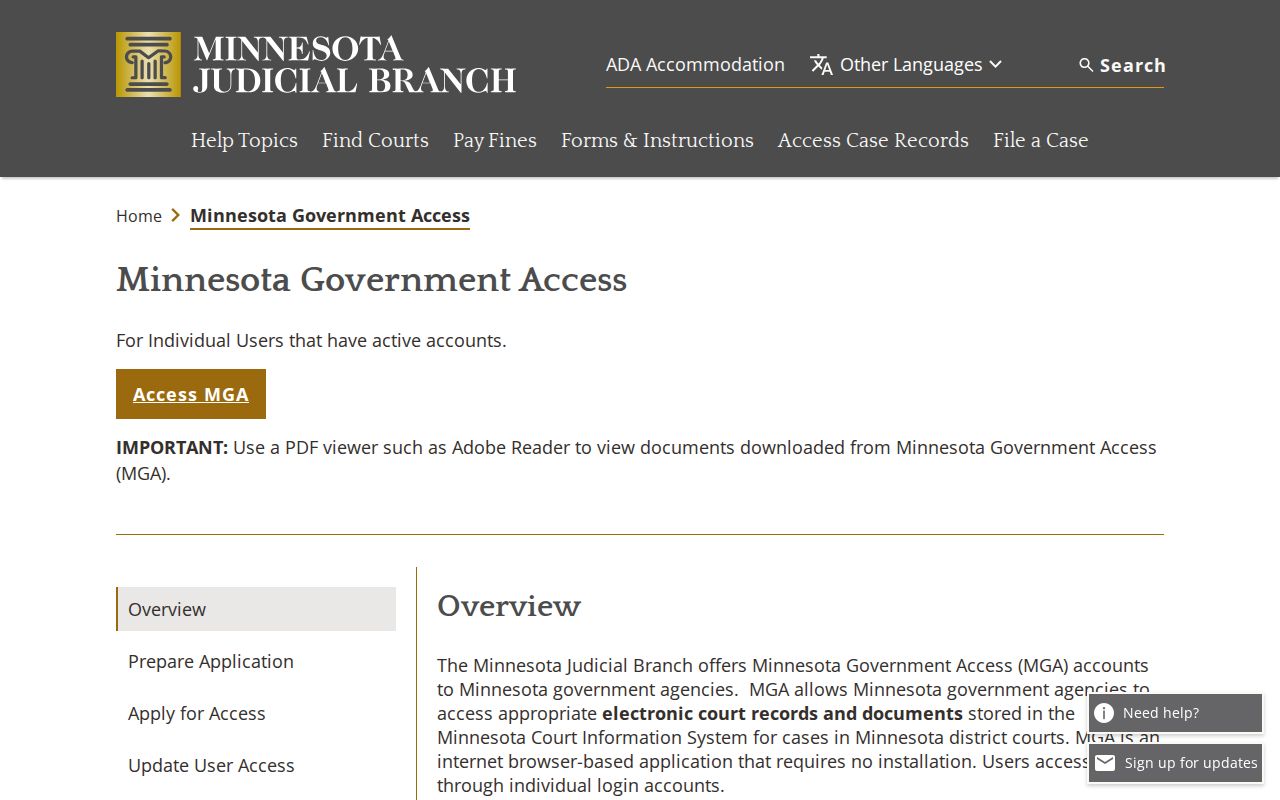
For a public reader in Cook County, one code never settles the question. The case details do.
Inside an Active Warrant Record
A Cook County outstanding warrant record carries the same fields as any docket entry, plus the conditions a judge attached. Read them in this order.
| Case file number | Connects the warrant to the case it belongs to |
|---|---|
| Warrant type | Arrest, failure to appear, sign-and-release, or probation |
| Issue date | When the warrant was signed, not when the event behind it happened |
| Offense named | The charge or citation underlying the process |
| Bail and conditions | Amount and release terms, if the court set them |
| Latest status event | Active, served, recalled, or quashed as recorded |
An entry with no service return does not prove the warrant is still open in Cook County. A served entry does not close the case.
Cook County Warrant Index Data Stays Confidential
Minnesota sorts law-enforcement data into layers. Arrest data are generally public. Active investigative data stay protected. Cook County arrest warrant index data can stay confidential until custody, service, or appearance occurs. So a records request can come back denied, redacted, or delayed without anyone doing anything wrong. A denial should name the classification behind it. That answer still helps. It tells you the agency holds something and points you to the court, the one office that can confirm a case status. Note: A confidential index entry is not proof of a warrant, so do not read a denial as a status answer.
Warrant Roundups and Most-Wanted Lists
A most-wanted page is not an active warrant list. A roundup or roster is a selection an agency chooses to publicize, while the underlying warrants stay with the issuing court. Cook County runs no official most-wanted page. The county has no Crime Stoppers warrant list and no reward policy.
| Product | Cook County Finding | What It Cannot Prove |
|---|---|---|
| Sheriff active warrant search | None located | Whether a warrant exists or is absent |
| County outstanding warrant list | None located | Completeness or identity matching |
| County most-wanted roster | None located | That a person not shown has no warrant |
| Jail roster document center | Published custody document | Warrant status or why a person is held |
The state program that does exist is separate from Cook County.
Note: The Minnesota DOC wanted fugitives page is a curated state product with its own tip channels, not a Cook County warrant list, and its roster stays on that state page.
Cook County Jail Roster vs Warrants
The Cook County jail roster is a document center with a file-name search and current PDF files. It shows who is in custody, not who has an open warrant. Warrants are not on it. The jail has five holding cells. It holds first-appearance and pretrial inmates for up to 72 hours excluding weekends and holidays, with longer pretrial stays housed in other counties. The Cook County jail roster page is the official publishing route for that custody document.
Use it for a custody question and use the court for a warrant question.
When Your Name Is on the Warrant List
If a Cook County case record shows a warrant in your name, call a lawyer before driving to the courthouse. An attorney can read the case. They explain the instrument, then arrange a surrender, a bond, or a motion to recall the warrant on terms you know in advance. New case or old, the path is the same. That is the whole playbook.
Important: Do not ignore an outstanding warrant. A traffic stop or any police contact can lead to arrest, and the Cook County warrant overview explains the resolution options.
Confirming Cook County Warrant Status
Need a warrant answer fast? Cook County Court Administration is the quickest official stop. You will find it at 411 W 2nd Street in Grand Marais, or call 218-264-7001 during business hours. There is a public records computer for case lookups, reached through the main parking-lot door. Cook County Court Administration explains the counter, the terminal, and which cases fall within the court's reach.
Bring a case number if you have one. Ask the Cook County clerk how a recall or service entry will show up once the court acts.
Cook County's 2024 Warrant-Resolution Workshop
Voluntary surrender can take surprising forms in Cook County. One example comes from a 2024 warrant-resolution workshop. The Cook County Shore Substance Use Recovery Court opened in 2016, and its participants spend roughly 15 to 24 months in treatment and supervision. A Judicial Branch article on the program tells of one participant who had an arrest warrant and turned himself in at that workshop. The Cook County Shore Substance Use Recovery Court article shares the graduation story without naming anyone involved. Treat the workshop as a single event, not a policy. It created no standing amnesty, no recurring schedule, and no fee waiver. For what a Cook County court can offer today, ask the court directly.